
SRNL Team Wins R&D 100 Award for Advanced Engineered Cellular Magmatics Project
The Savannah River National Laboratory Advanced Engineered Cellular Magmatics (AECM) technology team has been named as a winner for the 2025 R&D 100 Awards.
SRNL Researcher Cory Trivelpiece and his team developed the technology in partnership with Silica-X, Inc. Often called the “Oscars of Innovation,” the R&D 100 Awards recognize the most significant scientific and technological breakthroughs worldwide since 1963. With encouragement and support from lab leadership, SRNL’s Technology Partnership Office identified the AECM project as a candidate for the award. The communication department at SRNL, in partnership with Savannah River Nuclear Solutions, created supporting content and marketing materials to support the application process. This collaborative effort across SRS resulted in the first R&D award in several years.
“I’m incredibly proud of our SRNL team, led by Dr. Cory Trivelpiece, for earning this R&D 100 Award in partnership with Silica-X,” said Dr. Johney Green, SRNL director. “This recognition highlights the power of innovation and reflects not only our world-class science but also the commitment of SRNL and our collaborators to deliver solutions that advance national priorities and create lasting impacts.”
The AECMs were originally synthesized from post-consumer waste glass – tricolored “recycled” glass that constitutes most common consumer product containers. As much as 85% of curbside “recycled” glass is sent to landfills in the U.S., because it is cheaper to throw away a glass bottle than to recycle it into a new glass bottle. This is where AECMs have their greatest strength: many of the issues that prevent glass manufacturers from incorporating more recycled products into their feedstocks don’t apply to AECM production. SRNL has expanded those feedstocks to include commercial waste glass and waste-to-energy-ash.
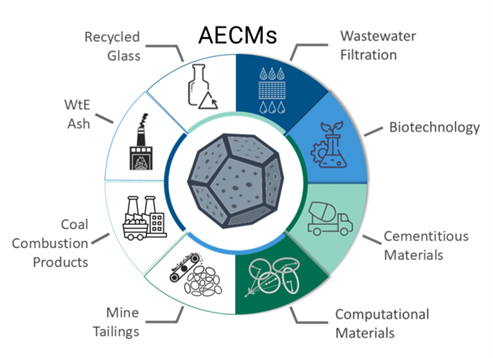
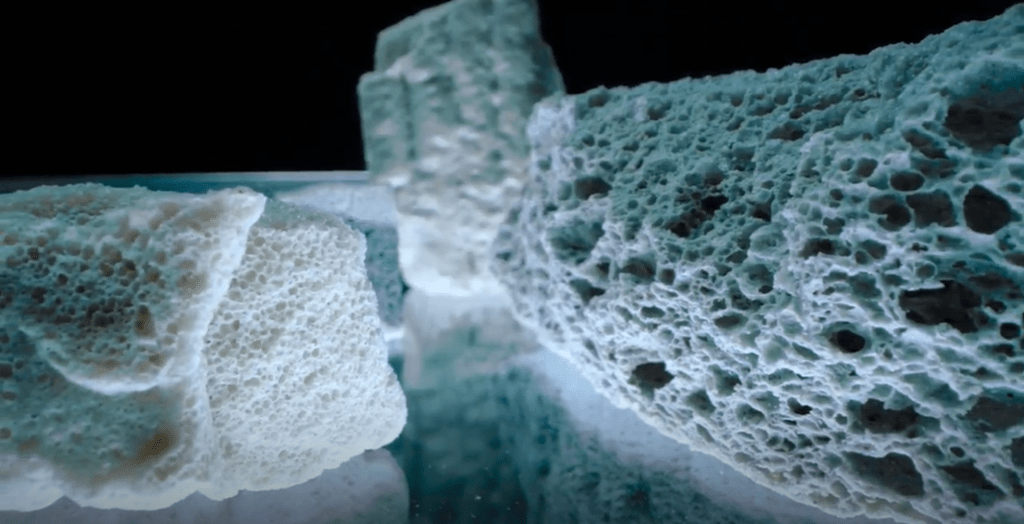
The flexibility of AECMs stems from their ability to be tailored chemically, mineralogically, and physically to meet the needs of multiple use cases. Born out of a need to mimic the properties of volcanic tephra thought to play a role in the extreme durability of ancient Roman concrete, SRNL researchers unlocked fundamental aspects of AECM processing that enable targeting of seemingly unrelated applications with minor modification to formulation and processing.
If implemented, this would enable a containerized waste form that requires no mixing equipment and minimal onsite operations – simply add the liquid waste to any container full of AECMs and chemistry takes care of the rest. Watch a video showcasing this technology.
“It’s an honor for me and this team to get recognition from the awards committee – to be selected for the award along with other national labs and some of the largest R&D companies in the world is truly humbling and amazing,” said Trivelpiece.
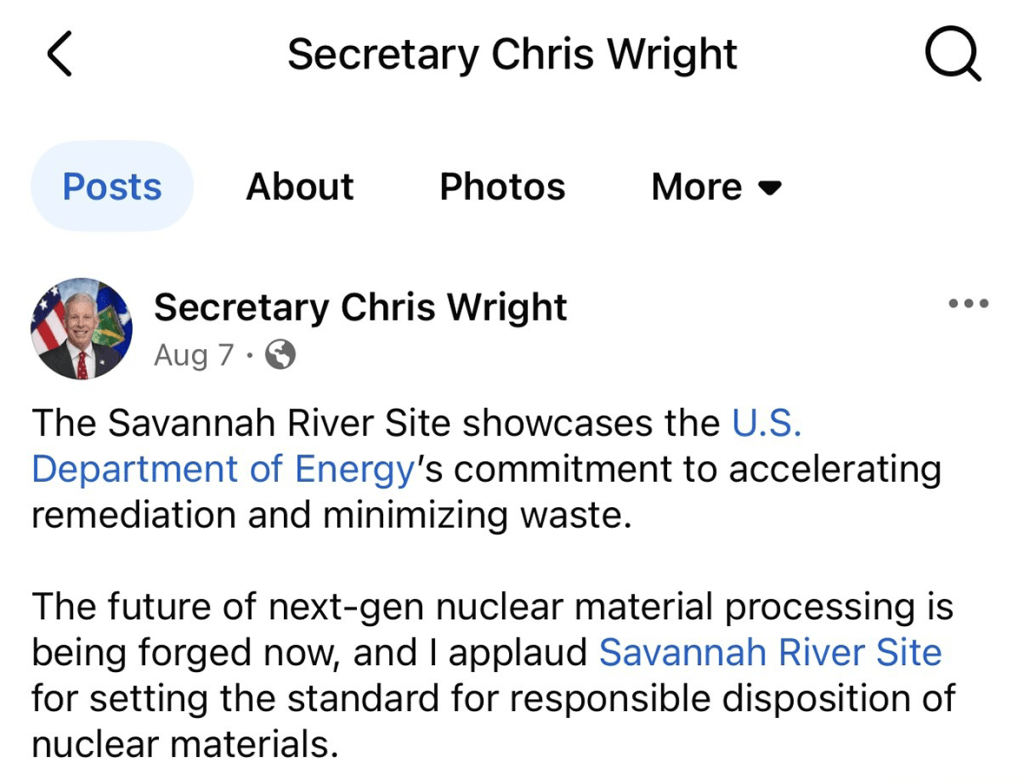
The Secretary of Energy visited SRNL on August 6. Trivelpiece briefed the secretary on AECMs during his visit. The secretary posted on his Facebook page next day, stating “The Savannah River Site showcases the U.S. Department of Energy’s commitment to accelerating remediation and minimizing waste. The future of next gen nuclear material processing is being forged now, and I applaud Savannah River Site for setting the standard for responsible disposition of nuclear materials.”
Trivelpiece’s team is moving their laboratory into the Advanced Manufacturing Collaborative (AMC) facility to continue advancing the technology. SRNL recently constructed the facility on the University of South Carolina, Aiken campus. “This is an example why the recently completed AMC Facility is so critical to SRNL’s future. And we can’t wait to see what the laboratory will do next,” said Roger Jarrell, principal deputy assistant secretary for EM.
The AECM technology is currently funded by the DOE Office of Environmental Management’s Laboratory Policy Office through the Hanford tank waste research and development program. According to Dr. Ming Zhu, EM’s senior advisor for laboratory policy, SRNL has been expanding its research portfolio through public-private partnership to position the laboratory for an enduring mission as EM works towards the completion of nuclear legacy cleanup since EM awarded the laboratory’s management and operating contract to Battelle Savannah River Alliance, LLC in 2021.
“SRNL’s partnership with Silica-X, Inc. enables real-time tech-to-market analysis of laboratory-scale results and the ability to translate these results to industrial scale solutions,” noted Trivelpiece. “This system of parallel scientific exploration and technoeconomic analysis rapidly intensifies commercialization and shaves years off the national laboratory’s product development cycle. This synergy enables SRNL researchers to develop solutions that are designed to end the cycle of take-make-waste all while accelerating EM’s cleanup mission at sites like Hanford.”
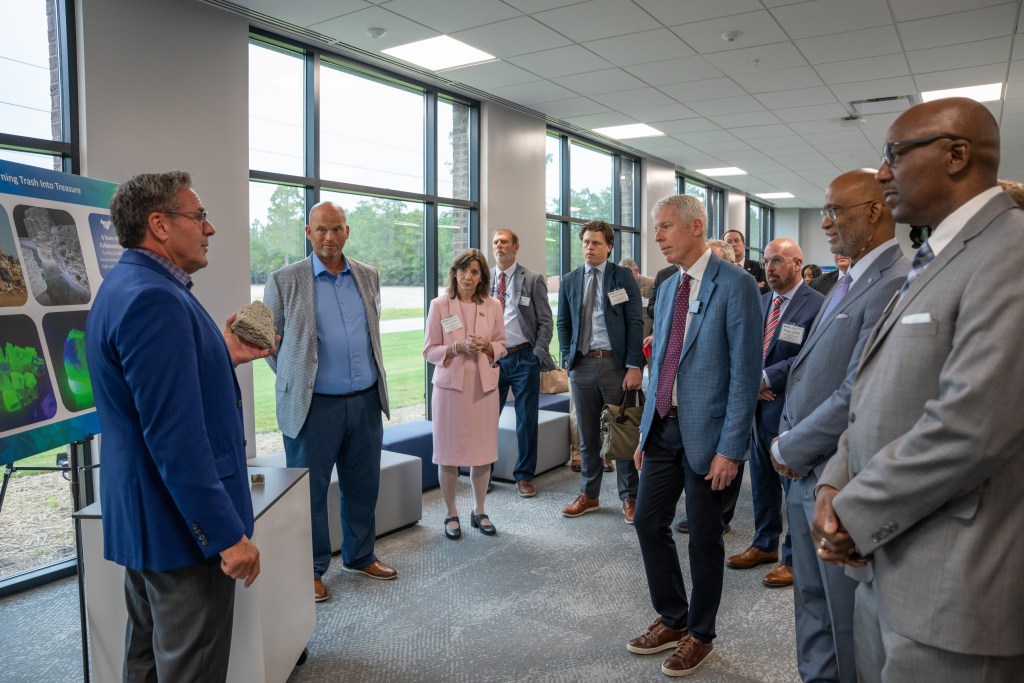
Presentation on ECMs at AMC ribbon cutting.
Philip Galland, CEO of Silica-X, Inc., SRNL’s industry partner, first presented the idea for collaboration in developing the AECM technology in a panel session at the DOE Waste Management 2022 Conference. After winning the Hanford tank waste research and development project in 2024 and the 2025 R&D 100 Award with Trivelpiece, Galland added:
“Being named an R&D 100 Winner with SRNL is a testament to what’s possible when national labs and industry collaborate to innovate — taking breakthrough science to market faster. Our partnership model not only accelerates solutions for urgent challenges like EM’s cleanup mission at sites like Hanford but also proves that collaboration is the winning formula for rapid impact at an industrial scale.”
SRNL will be recognized during the R&D 100 Awards Ceremony November 20, 2025, in Scottsdale, Arizona.