
Patent Awarded for Nanostructured Ceramic Membranes for Hydrogen Isotope Separation
AIKEN, S.C (September 9, 2025) — Savannah River National Laboratory received a U.S. patent September 9 for its Nanostructured Ceramic Membranes for Hydrogen Isotope Separation.
The patent introduces a proton conducting, nano-structured ceramic for hydrogen isotope separation from a dilute liquid stream. The primary application of this technology separates tritium from other by products of nuclear power generation. Tritium is a low energy beta emitter and not dangerous externally, but is a radiation hazard if inhaled, ingested, or absorbed into the body. The tritium present in used nuclear fuel is handled in reprocessing scenarios by either a pretreatment step before fuel dissolution, or as a form of tritiated water. Though relatively small amounts of tritium are present, tritiated water can build up over time within cooling water and water used in storage pools at nuclear power generating facilities.
Prior work demonstrated significant advantages of ceramics in the nuclear industry due to enhanced radiation stability and the ability to perform electrolysis at elevated temperatures in the vapor phase, which avoids the potential exposure and risk. An advantage of the nanostructured ceramic membranes is their ability to use low temperatures to both process and perform the isotopic separation for removal and recovery of a heavy hydrogen isotope like tritium.
SRNL inventors developed new nanostructured ceramic membrane technology that enable water to be detritiated, a concept that can be employed in other areas of nuclear waste management, broadening the disposal/treatment options available to the Department of Energy. Laboratory testing has been performed with deuterium and tritium, demonstrating the utility of the invention.
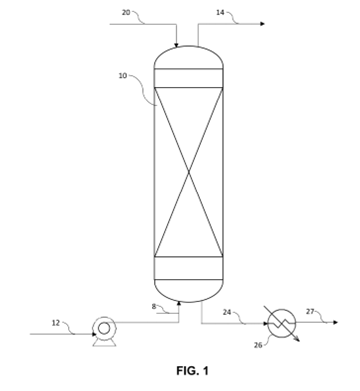
FIG. 1 schematic illustrates a separation system.
This technology was developed with researchers at Clemson University with funding from the DOE’s Nuclear Energy University Program in fuel processing off-gas management and tritium separations technology. Potential commercial end users include producers of medical isotopes (e.g., Mo-99) and fusion-related energy research as well as utility companies that manage nuclear energy production reactors or are currently developing advanced reactor designs.
About Savannah River National Laboratory Savannah River National Laboratory is a United States department of Energy multi-program research and development center that’s managed and operated by Battelle Savannah River Alliance, LLC (BSRA) for the Department of Energy’s Office of Environmental Management. SRNL puts science to work to protect our nation, to protect our environment and to ensure energy resiliency. (www.srnl.gov)
Media contact: SRNL Media Relations