
SRNL’s Grout and Cement Technologies Ensure Safe and Efficient Nuclear Material Storage
Executive Order 13972 was issued in January of 2021 and presented a call to action for the development of small modular nuclear reactors to help ensure the nation’s energy flexibility and security. An additional series of executive orders issued in May of 2025 targeted the revitalization of nuclear energy efforts across the United States in a “nuclear renaissance,” including the goal of quadrupling the nation’s nuclear power output by 2050. SMRs will be a vital component of this effort. SMRs function similarly to traditional nuclear reactors, but their smaller size and modularity allow them to be integrated into existing power grids or be deployed into remote locations.
Critical to this bold initiative is the advancement of the nuclear fuel supply and its reprocessing. Savannah River National Laboratory is positioned to lead the way in these areas. Drawing upon its many decades of world-class experience in the nuclear world, SRNL is providing innovative materials for fuel fabrication, such as High-Assay Low Enriched Uranium.
While SRNL is fueling the nuclear movement, its expertise in waste nuclear material decommissioning is equally as important. Some of the used nuclear fuel can be reprocessed back into usable nuclear fuel, but some cannot. Environmental considerations for handling and disposing of materials that cannot be reprocessed into additional fuel must be made before SMRs and additional reactors can be brought online.
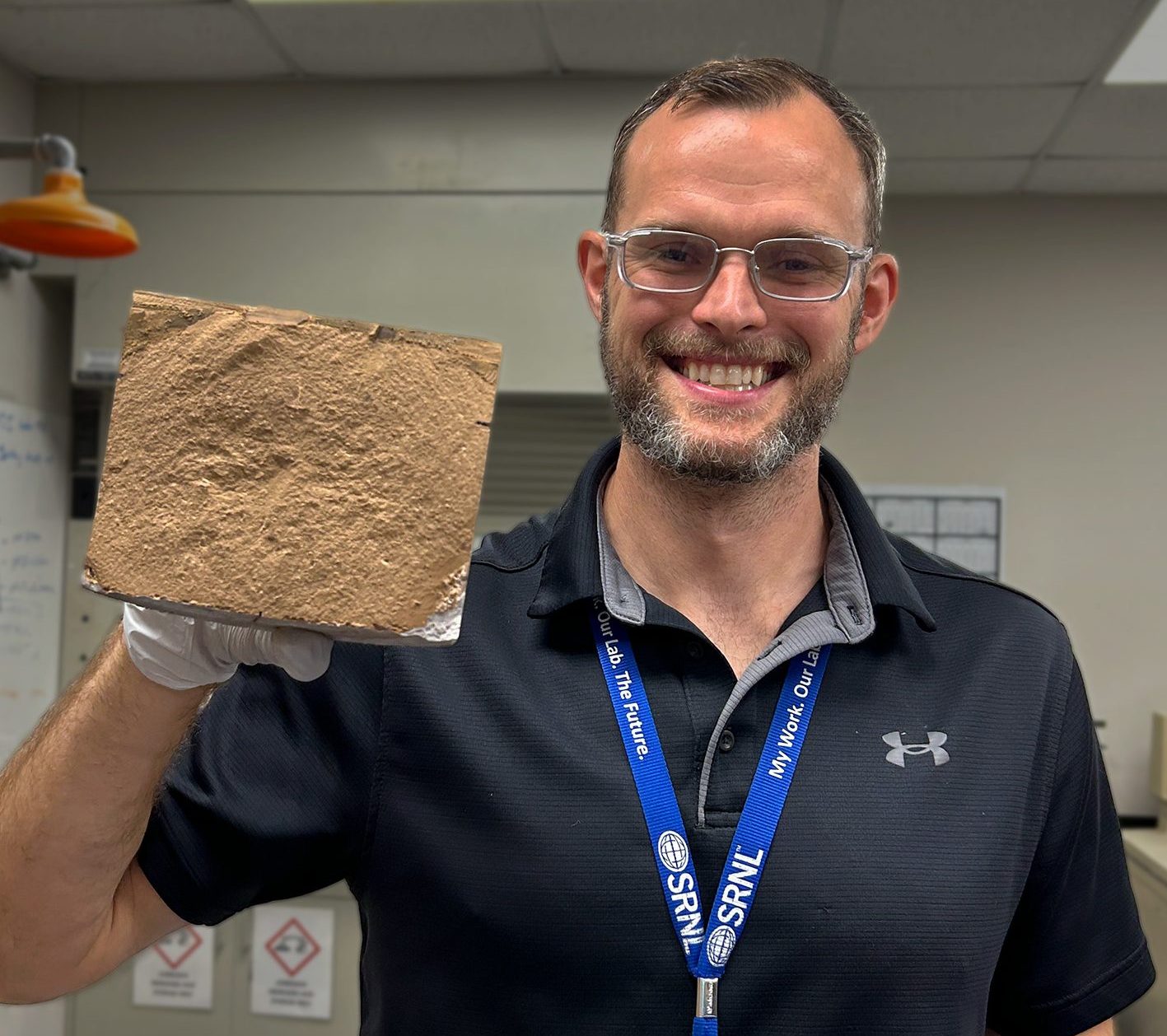
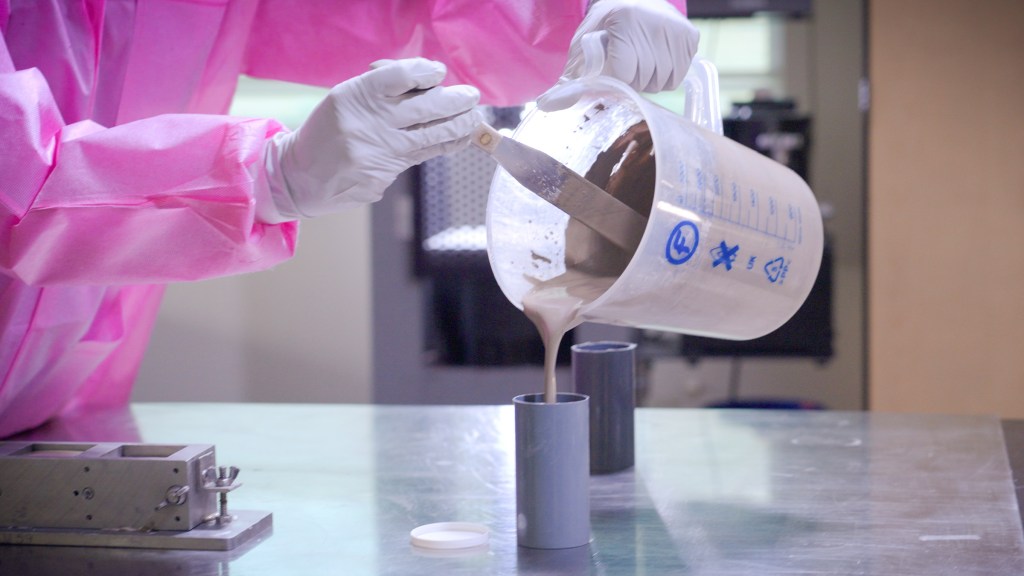
SRNL’s unique capabilities in grout science offer a cost-effective approach to accomplish this. Grout science is the study of cementitious (cement-like) material that can be used for in-place site decommissioning or nuclear waste tank closure across the Department of Energy complex and beyond. Grout is used to create barrier walls around waste material. The main difference between grout and household concrete found in roadways and sidewalks is the absence of aggregate, gravel and stone, in grout. The grout must be a flowable material that can hold as much waste as possible to immobilize and safely store . The waste first gets mixed with cementitious materials – then the grout is added. Any formulation of grout is assessed to determine its useful lifespan, which is usually 500-1,000 years, and possibly more.
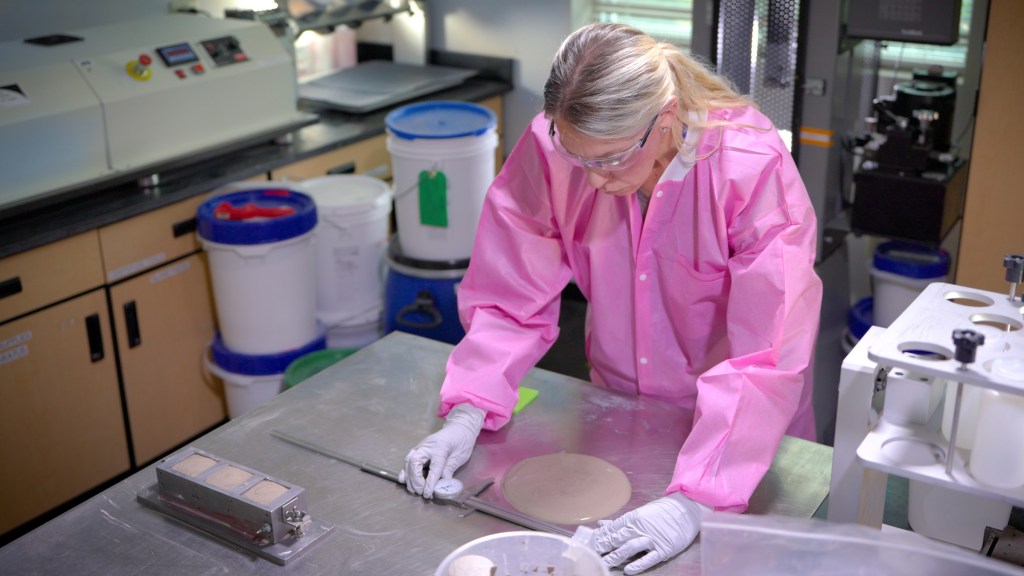
SRNL has played a leading role in the study of grout-based waste forms, starting in the 1980s with the Saltstone Production Facility and the Saltstone Disposal Units on the Savannah River Site in Aiken, SC. The Saltstone Production Facility mixes decontaminated salt waste from the Salt Waste Processing Facility with cementitious materials (blast furnace slag and fly ash) and transfers the treated waste to the SDU. SDUs are massive concrete structures each holding up to 33 million gallons of grout waste in perpetuity. SRNL developed the original grout recipe used at these SRS facilities in conjunction with SRS Liquid Waste Operations. SRNL also developed the clean grout fill for the first million-gallon nuclear waste tank closures in 1997.
The lab has a multitude of talented grout scientists to develop and implement its many uses. “I got into grout science in my post doc days by looking at the interaction of radionuclides and concrete,” said SRNL Grout and Cementitious Materials group manager Will Jolin. “After coming to SRNL, I wanted to understand the possibilities within grout to address storage and transport concerns for contaminants and bad constituents. As an environmental engineer, my focus has been on the safety and security of people and the environment we live in. I’m drawn to grout because of its nature as a sound and secure waste form.”
Nuclear energy applications result in various types of waste, typically categorized as low- or high-level waste. Because the radioactive materials within the waste cannot be completely removed, processes and techniques were developed to convert liquid waste into safer forms for long-term storage. This effort protects the environment from spills and leaching and makes tank closure possible. High-level waste is only addressed through vitrification, which immobilizes the radioactive materials within a glass structure.
Much of SRNL’s grout work involves technology development beneficial for current and future nuclear power applications, but this can also be used at medical and isotope production facilities and defense programs. There are numerous other potential applications for the cementitious materials developed at SRNL. Because grout provides technology to process the dregs from other processes that do not require vitrification, it serves as a safe and reliable solution to a developing waste supply in the US. A current effort to help support DOE’s Hanford Site Washington includes analysis of cementitious reactions within glasses to address future waste forms.
The national supply of fly ash, a powdery residue produced by coal plants and typically used as a pozzolanic (silica- and aluminum-containing) material in concrete, is limited. SRNL is exploring natural pozzolans, a material that reacts chemically with calcium hydroxide and develops cementitious properties, to determine viability as a fly ash replacement.
SRNL is also considering potential applications of grout science to support the Genesis Mission. The potential development of a virtual cement laboratory could streamline the identification process for constituents through super intelligence to create new grout recipes.
“SRNL has the expertise from a long history to solve forward-facing problems in grout science waste form technologies,” said Jolin. “Grout provides a tunable and robust media to close and secure waste forms and other contaminated areas that can help the overall DOE mission.”
While it’s not used for your neighborhood’s sidewalk, grout still provides the path to innovations in the nation’s nuclear renaissance.