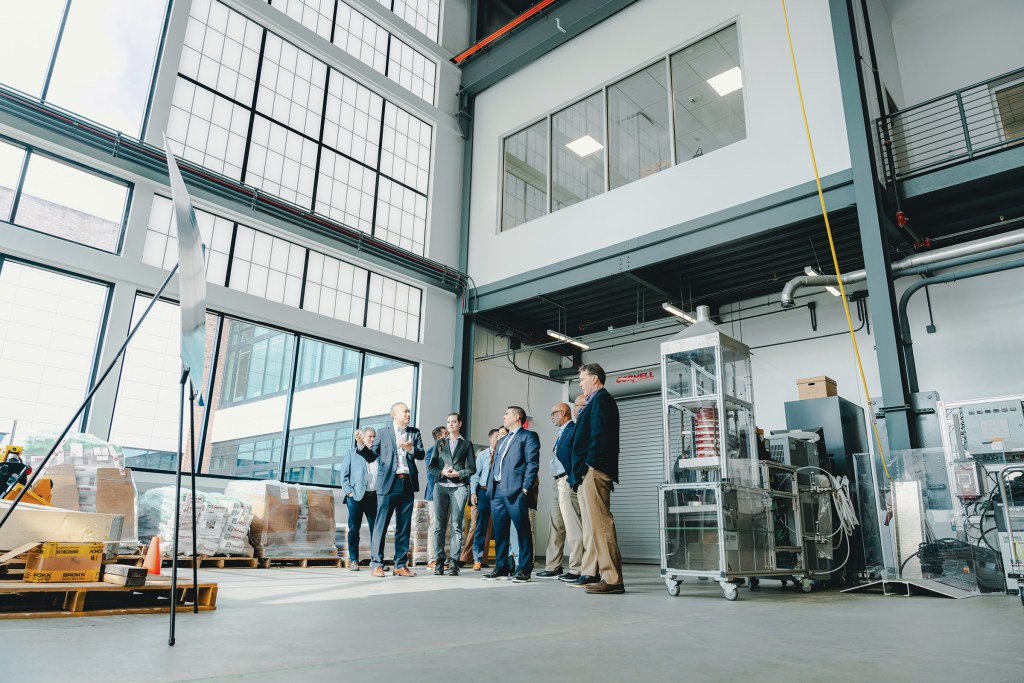
G. Jeremy Leong is the research director at SRNL’s new Advanced Manufacturing Collaborative, a 63,000 square-foot facility on the campus of the University of South Carolina Aiken.
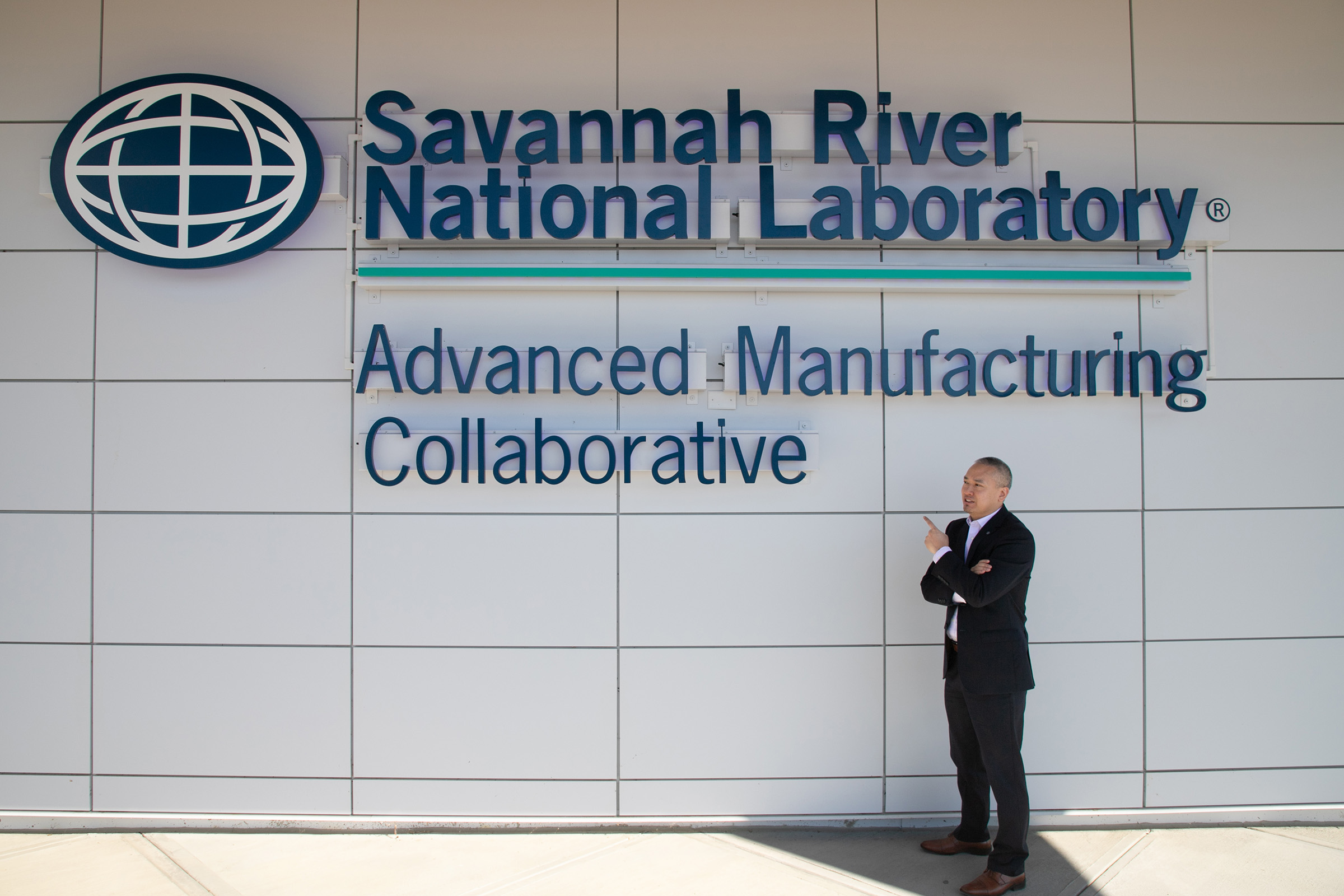
G. Jeremy Leong is a driving force in advancing innovation at the intersection of advanced manufacturing and mission critical research. As AMC director, Leong leads AMC’s scientific vision and builds strategic partnerships with government agencies, universities and industry leaders nationwide.
His career includes influential roles at the Department of Energy and the Department of War, where he managed multi billion dollar public private partnerships and guided technologies from concept to deployment in areas ranging from advanced manufacturing to warfighter support applications. Leong holds a Ph.D. in applied chemistry from the Colorado School of Mines and has collaborated with top laboratories including the Air Force Research Laboratory and the National Laboratory of the Rockies. He also received the Secretary of Energy’s Honor Award, the highest internal non-monetary distinction available to DOE employees and contractors. With more than 30 peer reviewed publications, internal assessments and congressional reports, Leong brings expertise and vision that will strengthen SRNL’s collaborative research efforts.
We sat down with Leong to discuss his vision for the AMC, the future of transformational science, and how he is helping shape the next wave of innovation at SRNL.
It’s been said that the AMC is the “front door to the lab.” What does that mean to SRNL, the local community and anyone who comes through the front doors at the AMC?
When we describe the AMC as the “front door to the lab,” we mean it serves as SRNL’s welcoming entry point for the community, partners, students and visitors. It functions like a front porch—an open, inviting space meant to be a true gateway for engagement and collaboration. The AMC is expanding SRNL’s reach by opening our doors and highlighting the impactful research happening right here in the region. Our goal is for every visitor—whether a student, local resident or industry leader—to feel welcomed and inspired by the innovative work taking place at SRNL.
The word “collaborative” implies partnerships. What types of partners, and what is the vision for these partnerships?
“Collaborative” is at the core of the AMC’s partnership model, which we describe as a “triple convergence.” We intentionally build connections between academia, industry and government at the local, regional and national levels, with the goal of creating partnerships that deliver value for everyone involved.
These collaborations take many forms, including joint R&D projects, shared use of specialized equipment, community outreach and workforce development programs. Guided by SRNL’s three mission areas and 10 R&D priorities, the AMC works to leverage these partnerships to expand our impact and accelerate innovation. Ultimately, the AMC serves as a hub where diverse partners come together to advance science, address critical challenges and strengthen our community.
What type of space and resources does the AMC offer that are unique to the facility?
What truly sets the AMC apart is the modular and highly flexible design of its laboratory spaces. These labs are physically interconnected, intentionally fostering integration and collaboration by bringing researchers and partners together in close proximity. Another distinctive feature of the AMC is its location on a public university campus, which greatly enhances accessibility for external partners and stakeholders. This unique combination of adaptable workspaces and an open, accessible setting make the AMC an ideal environment for innovation and collaborative discovery.
How do you see the AMC developing over the next decade?
I see the AMC becoming a true beacon of innovation—not only for the Southeast, but as a national and global leader in advanced manufacturing. It will be a place where today’s most pressing challenges are met with bold ideas, breakthrough technologies and a culture of fearless collaboration. Our partnerships with academia, industry and government will continue to grow, creating a vibrant ecosystem that accelerates discovery and delivers real-world impact.
Both physically and intellectually, the AMC will expand its reach. We will drive advances in fusion energy research, robotics and energy resilience, while using advanced computing to unlock solutions once thought unattainable. Just as important, I hope the AMC serves as a catalyst across SRNL, inspiring staff to embrace innovative thinking and pursue transformational science.
The AMC is more than a facility—it is a movement. It is a place where creativity and ambition converge, where transformative ideas take root, and where the future of manufacturing and technology is continually reimagined.
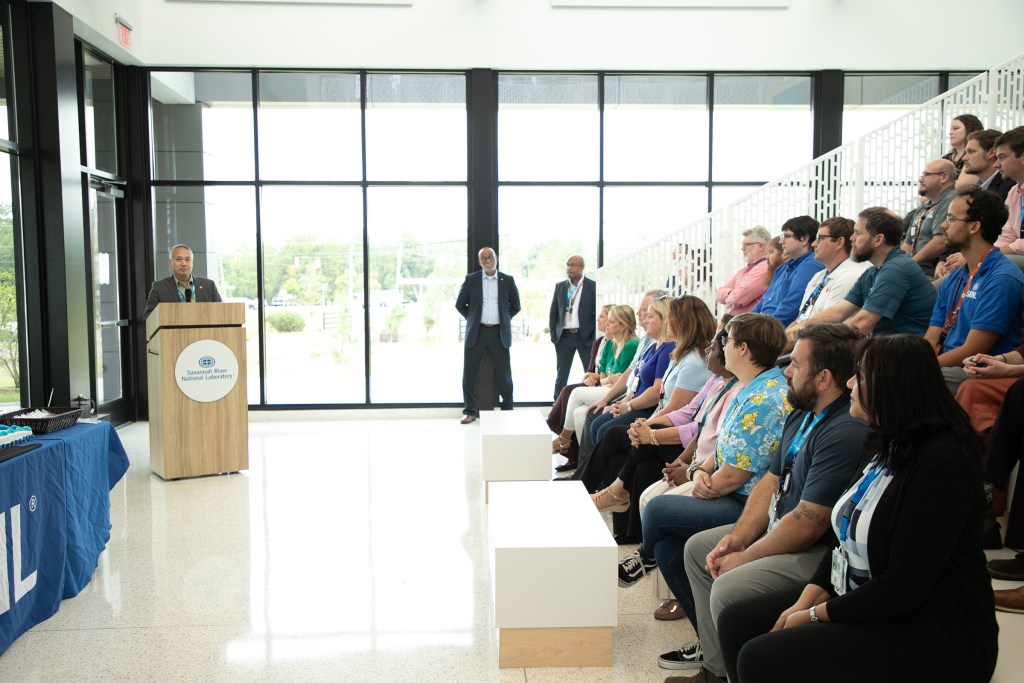
How does the AMC integrate with the main SRNL campus on Savannah River Site?
The AMC is a central pillar of SRNL’s new Science, Innovation and Energy Directorate, bringing together all the laboratory’s mission areas to create a dynamic environment for scientific advancement. As a cornerstone facility, it unites diverse expertise and groundbreaking research, serving as a catalyst for collaborative innovation.
The AMC is also a more accessible entry point to SRNL because it is a non-radiological, non-classified facility, and on a public university campus. This openness allows researchers to explore and refine concepts before moving them to the main Savannah River Site campus for work that requires radiological or classified capabilities. In this way, the AMC integrates seamlessly with the broader SRNL ecosystem, helping accelerate the path from concept to impactful solutions and ensuring innovation thrives across the laboratory.
What’s an exciting development coming down the pipeline?
One of the most exciting developments at SRNL is the launch of a state-of-the-art high performance computing system—a major cross-functional achievement involving teams from every SRNL directorate and division. Now housed at the AMC, this system significantly expands our computing power and provides centralized access for researchers, reflecting our belief that integration drives innovation and impact.
This new HPC capability will enable SRNL to tackle increasingly complex, computation-heavy work, from advanced modeling and simulation to SI, machine learning, and the ambitious DOE Genesis Mission. Its scalability and flexibility position SRNL at the forefront of computational science, strengthening our competitiveness and opening the door to new partnerships and collaborative research opportunities.