
SRNL Laboratory Fellow Spotlight: Paul Cloessner
The honor of being named a Laboratory Fellow is the highest scientific and engineering achievement within SRNL and is granted by the Laboratory Director upon the recommendation of the Fellow Committee and Review Panel. Former U.S. Secretary of State Condoleezza Rice once said, “People who end up as ‘first’ don’t actually set out to be first. They set out to do something they love, and it just so happens that they are the first to do it.” That quote couldn’t be more applicable for Paul Cloessner, who was SRNL’s first Laboratory Fellow; former SRNL Laboratory Director Terry Michalske conferred the honor in 2010.
A native of the south, Cloessner was drawn to SRNL after completing his B.S. in chemistry at Louisiana State University and Ph.D. in nuclear chemistry from Florida State University. “In the 80s, Savannah River was basically a nuclear Disneyland,” said Cloessner. “They were operating nuclear reactors, a heavy water plant, the tritium facilities and we were building Defense Waste Processing Facility (DWPF). If it was nuclear, the possibilities were endless.”
SRS’s (then known as Savannah River Plant) nuclear materials production piqued Cloessner’s interest and in 1984, he began his career with the Savannah River Lab. Cloessner worked in the lab’s analytical department before transitioning to working in fuel and target fabrication for the site’s reactors. After the end of the cold war, Cloessner returned to the lab as the group manager for the analytical team managing waste analysis. In addition, he supported the startup of the DWPF and the Plutonium-238 programs that provided power for deep space probes.
After moving into managing the gas transfer system group in 1998, Cloessner found his stride as a manager on various projects within the Weapons Production Technology group. His notable projects include working on the Tritium Extraction Facility and tritium consolidation project. “From tritium production, extraction, purification, environmental, intelligence related to tritium to foreign tritium programs and nonproliferation programs. I have worked with just about anything and everything to do with tritium,” said Cloessner.
Cloessner has shined as a manager in the weapons organization. “Weapons programs grow by being consistent in delivery and product,” said Cloessner. “Our weapons team has the right personnel committed to carrying out the nation’s mission and as long as we continue in that path forward, those missions and projects will be assigned to SRNL.”
Though exciting, advancing the nation’s weapons mission comes with the drawback of anonymity, limiting opportunities for publications and patents. However, Cloessner’s primary focus was never public recognition but addressing the world’s nuclear challenges. One of SRNL’s recent achievements, the Tokamak Exhaust Processing project for purifying tritium in fusion energy was decades in the making due to Cloessner’s advocacy for fusion and tritium.
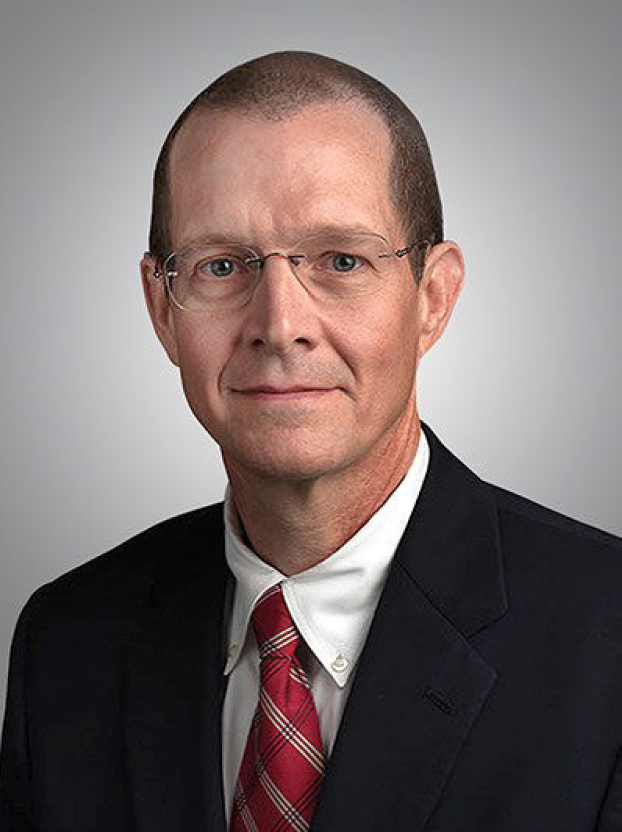
Paul Cloessner
This rich and diverse scientific background and Cloessner’s ability to seek challenges and address the nation’s problems, provided the foundation for the ideal characteristics of a Laboratory Fellow. While the title of Laboratory Fellow didn’t exist before Cloessner, he was honored to be recognized for his work and problem-solving mentality and enjoys the flexibility it offers. By not being confined by project time constraints or management oversight, Cloessner is afforded the ability to meet a sponsor’s needs in his own way.
“I have always been the type of person that wanted to work on the real hard problems that needed to be solved,” said Cloessner. “As a Lab Fellow it is my duty to anticipate and see problems that others don’t recognize and ensure the decision makers are aware and we work together address those concerns.”